Elections are a very important feature in any democracy. Elections give voice to the political will of the people. The right to take part in government directly or through freely chosen representatives is also enshrined in the Universal Declaration of Human Rights (article 21.1) and the International Covenant on Civil and Political Rights (article 25).
While elections are an important feature in any democracy, they also need to be meaningful and credible. Elections must represent the free will of the people. Thus, the electoral processes, especially those processes related to the registration, polling, counting, transmission and determination of results need to comprehensively protect and safeguard interests of both the voters and candidates. This is what makes monitoring of elections an important, if not strategic undertaking especially for political parties and candidates.
Election monitoring is about information gathering, examination and evaluation of the electoral process. It is the process of observing the conduct of an election and the behaviour of different stakeholders during an election (including political parties, the electoral commission officials, government, NGO’s and the voters) in order to determine the compliance with relevant laws, regulations and international standards. Electoral monitoring therefore serves to ensure that the integrity of an election is upheld through shaping perceptions about the quality and legitimacy of electoral processes.
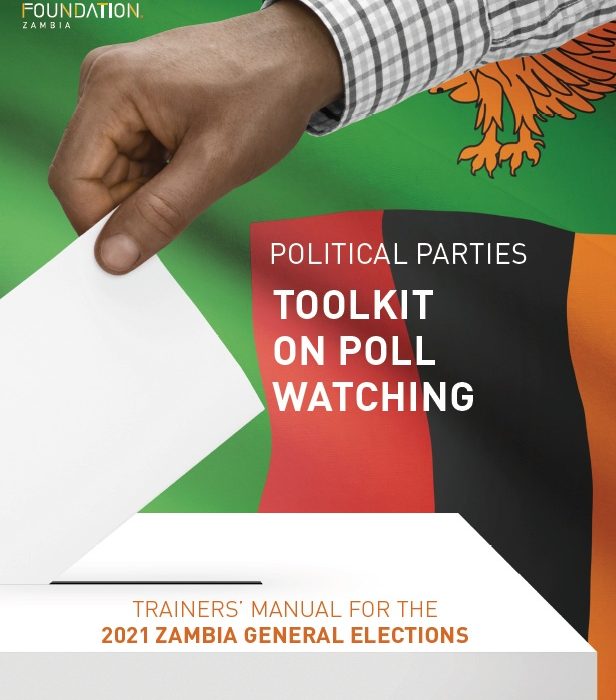
DWF has prepared this Political Parties Poll Watching Trainers Manual for the 2021 General Election in Zambia. The manual builds on and draws lessons from 2016 general elections as well as DWF’s regional comparative experiences. The manual provides seeks to enhance the level of understanding of the
participants on key thematic areas including the following:
• Understanding the importance of election monitoring in enhancing credibility of elections
• Understanding the legal framework of Zambia with regards to poll watching and the role of
political parties in this context
• Qualities of a poll agent, their roles and responsibilities
• Do’s and don’ts in monitoring
• Polling station and totaling centers procedures and processes
• Procedures for logging complaints
• Understanding the relevant electoral forms to be used on the polling day